
Hold Your Horses: What Community Leaders Need to Know About Managing Large Animals During a Fire Conflagration
Wildfires don’t just threaten people — they put horses, cattle, and other large animals at serious risk. In this article, I share practical insights for community leaders and emergency managers on why large animals require special planning, the challenges they create during evacuations, and actionable steps to integrate them into your wildfire response strategies.
Chief Rickman
4/6/20263 min read
Hold Your Horses: What Community Leaders Need to Know About Managing Large Animals During a Fire Conflagration
By Tracy Rickman
Wildfires move fast, and in many parts of California and across the West, they don’t just threaten homes and people — they put thousands of large animals at risk too. Horses, cattle, llamas, and other livestock often become secondary priorities during an emergency, but for community leaders, emergency managers, and public safety officials, ignoring them can create dangerous complications that slow evacuations, strain resources, and put both animals and responders in harm’s way.
After years of working with public agencies, first responders, and community organizations through Rickman Training Consultants, I’ve seen how quickly a well-intentioned response can unravel when large animals enter the picture. Most responders are highly trained in human evacuation and fire suppression, but far fewer have practical experience handling horses or other large livestock under stress. That gap can turn a manageable situation into chaos.
Why Large Animals Require Special Attention in Wildfire Planning
Large animals behave differently under pressure. A panicked horse is strong, unpredictable, and can easily injure itself or the people trying to help it. During a fast-moving fire conflagration, the combination of smoke, noise from sirens and aircraft, and the urgency of evacuation creates an environment where standard human-focused protocols fall short. The following video is a good example:
Community leaders need to understand a few hard realities:
- Animals don’t evacuate themselves. Many owners may not be home when the fire starts, or they may lack the equipment and training to move their animals quickly.
- Horses and livestock can block roads or create traffic hazards if they break loose or refuse to load into trailers.
- First responders are often pulled into animal rescue without proper training, diverting them from life-saving human priorities.
- Sheltering large animals requires space, feed, water, and veterinary support that most standard evacuation centers simply don’t have.
Practical Steps Community Leaders Should Take Now
If you’re responsible for emergency planning in a jurisdiction with farms, ranches, or equestrian communities, here’s what I recommend building into your wildfire conflagration plans:
1. Include Large Animal Considerations in Your Emergency Operations Plan (EOP)
Don’t treat animals as an afterthought. Create specific annexes or appendices that address livestock evacuation, temporary sheltering sites (fairgrounds, equestrian centers, private ranches), and coordination with local animal control or agricultural extensions.
2. Train Responders in Basic Large Animal Handling
Even a short, targeted training session on horse behavior, safe leading techniques, trailer loading, and stress indicators can make a huge difference. Knowing how to approach a frightened horse calmly can prevent injuries and speed up operations.
3. Encourage Pre-Planning with Property Owners
Promote community outreach that helps horse and livestock owners prepare:
- Identify at least two evacuation destinations well in advance.
- Keep trailers maintained and ready, with a full tank of gas.
- Train animals to load calmly.
- Assemble an evacuation kit with halters, leads, medical records, feed, and water for 72 hours.
4. Establish Mutual Aid Agreements
Partner with neighboring jurisdictions, 4-H clubs, rodeo grounds, and veterinary networks so you have pre-arranged places to move animals when local options are overwhelmed.
5. Evacuate Early — “Hold Your Horses” Doesn’t Mean Wait
The best advice for owners is simple: move animals at the first evacuation warning, not the mandatory order. For leaders, that means messaging this clearly and repeatedly in public communications.
The Leadership Responsibility
As someone who trains public sector professionals and helps organizations build stronger emergency preparedness programs, I believe effective leadership means planning for the entire community — including the four-legged members. Neglecting large animals doesn’t just risk animal welfare; it can compromise the safety of responders and delay overall evacuation efforts.
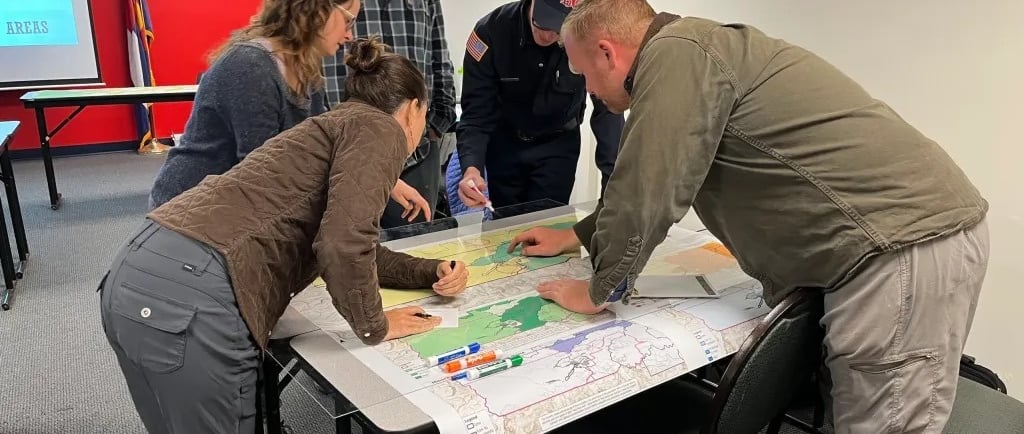
At Rickman Training Consultants, we specialize in helping agencies develop realistic, scenario-based training that bridges these gaps. Whether it’s tabletop exercises, field drills that incorporate large animal handling, or workshops on integrated emergency planning, we focus on practical skills that translate directly to better outcomes during high-stress events like wildfires.
If your community faces wildfire risk and you want to strengthen the animal component of your emergency response, I’d be happy to discuss how we can tailor a training program to your needs.
